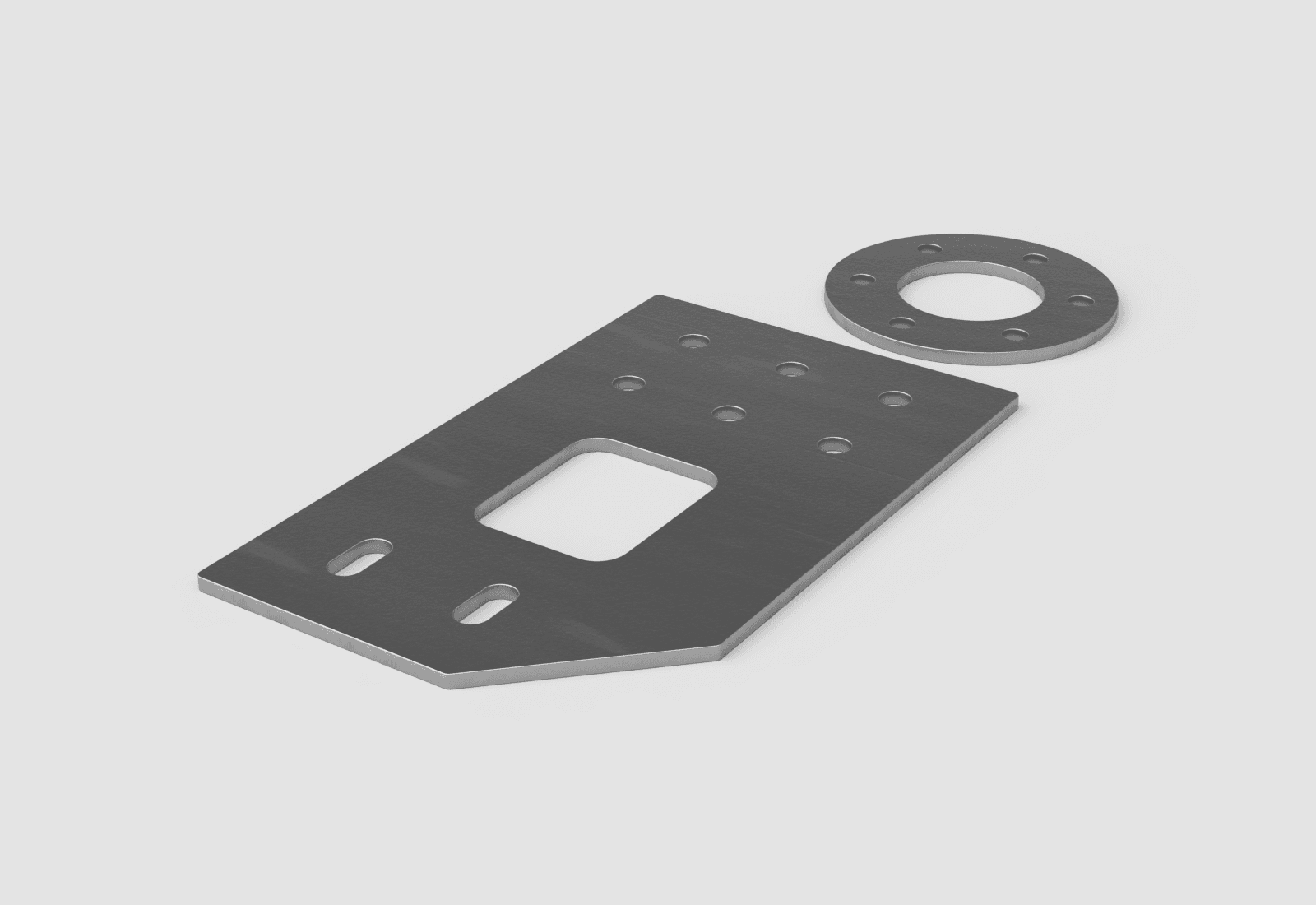
Mona Steel LLC, headquartered in Anaheim, California, cuts production sheet and plate parts on a 20 kW fiber laser for fabricators, OEMs, contractors and solar EPCs across Southern California and nationwide. We are set up for volume work: production releases, nested kits and repeat programs, with ASTM-spec material and mill test reports when we supply the steel. We also quote smaller runs when we can help.
Send us a drawing or a CAD file and our estimating team will review it, nest it for material efficiency, and come back with a clear quote. We can supply the material, cut it, bend it, and coordinate finishing so you receive complete parts on one purchase order.
Why fiber laser cutting?
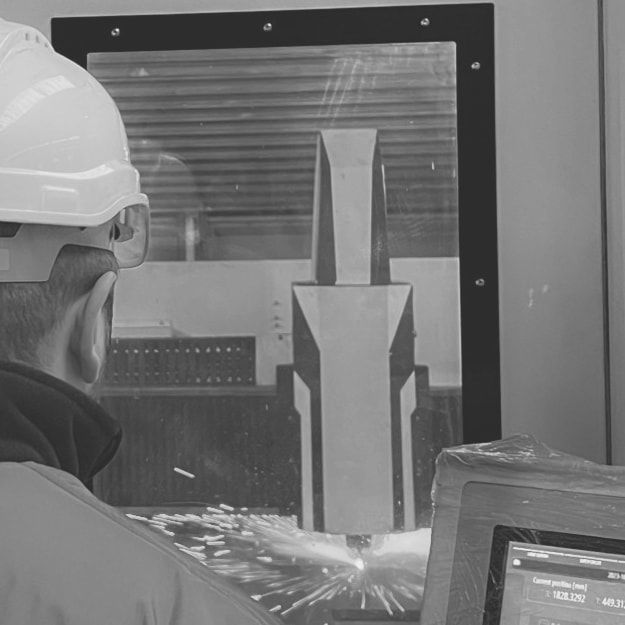
Fiber lasers cut faster than CO2 and plasma on most sheet and light-plate work, with a narrow kerf, a small heat-affected zone and edges that often need little or no secondary finishing. That means less grinding, better weld prep and tighter hole locations.
High laser power also opens up thicker material and faster feed rates, which lowers your cost per part on production runs. Reflective metals such as aluminum and stainless cut cleanly on fiber technology.
Built for production and repeat orders
Volume work is where a 20 kW fiber laser pays off. Parts in a release are nested across sheets to cut scrap, unit pricing improves as quantity increases because setup and nesting costs are spread across more parts, and every order is inspected, labeled by part number and delivered to your shop or job site.
Send the quantity per release and expected annual usage with your files, so the quote covers both the release in hand and the program behind it. As a general guide, these are the things that move the price of a laser-cut part:
| Cost driver | How it affects the quote |
|---|---|
| Material | Usually a large share of the part price: grade, thickness and how well the parts nest on the sheet |
| Cut length and pierces | Machine time follows the total length of cut and the number of pierces, and each pierce takes longer as plate gets thicker |
| Assist gas | Nitrogen, used for an oxide-free edge, costs more to run than oxygen |
| Setup and nesting | Done once per part and spread across every part in the release |
| Quantity per release | Larger releases spread setup and nesting across more parts, so unit pricing improves |
| Bending, welding and coating | Quoted with the cutting, on the same order |
General guidance, not a price list. Every quote is itemized by part.
From file to finished part
A simple, predictable process that keeps your project moving:
- Step 01
Send your files
Upload DXF, DWG or STEP files with material, thickness, quantity and finish requirements.
- Step 02
Design review
We check geometry, hole sizes and tabs for manufacturability and flag anything that could cause problems.
- Step 03
Nest & quote
Parts are nested to cut scrap and you receive a clear, itemized quote.
- Step 04
Cut, form & finish
Parts are cut, deburred and, if required, bent, welded and coated.
- Step 05
Tag & deliver
Orders are inspected, labeled by part number and delivered to your shop or job site.
Laser-cut hardware for roll-formed programs
Clips, splice plates, purlin and girt connection plates, base plates and pile hardware can ship with roll-formed C-purlins, Z-purlins and solar piles on the same purchase order. The profiles and the hardware that connects them are quoted and delivered together, with mill test reports for both.
C-purlins, C-channels & Z-purlins Custom roll forming Solar C-piles & U-piles
Typical laser-cut parts
From simple brackets to complex nested kits, typical laser cutting work includes:
- Base plates, gussets, stiffeners and clip angles
- Solar racking hardware, splice plates and brackets
- Machine guards, enclosures and equipment panels
- Flanges, rings, washers and shims
- Architectural panels, screens and signage
- Agricultural and material-handling equipment parts
Cut edges, paint and galvanizing
As a general rule, oxygen-assist cutting of carbon steel leaves a thin oxide layer on the cut edge that can affect paint and powder-coat adhesion, while nitrogen-assist cutting leaves an oxide-free edge.
Thermally cut edges, laser-cut edges included, are also harder than the rest of the part. The American Galvanizers Association notes that a hot-dip galvanized coating can come out thin or flake on such edges, and advises the fabricator, the galvanizer and the steel supplier to talk it through before the work is galvanized; on large orders, the edges can be prepared before the steel reaches the galvanizer.
Tell us the finish with your files so the quote reflects it.
What to send for a production laser quote
To quote a production release or program, send:
- Files with their revision: 1:1 DXF in inches, or STEP, DWG or a dimensioned PDF
- Material grade, specification and thickness
- Quantity per release and expected annual usage
- Bending, welding and finish, such as galvanizing or powder coat
- Packaging and labeling requirements
- Ship-to ZIP code and need-by date
Common applications
- Structural steel connections
- Solar mounting hardware
- OEM equipment parts
- Architectural metal
- Enclosures & guards
- Agricultural equipment
Fiber Laser Cutting FAQ
What laser cutting volumes are you set up for?
Mona Steel LLC is set up for volume work: production releases, nested kits, plate parts and repeat programs. Unit pricing improves as quantity increases because setup and nesting costs are spread across more parts. We also quote smaller runs when we can help.
What file formats do you accept for laser cutting?
We work with DXF, DWG, STEP and IGES files, as well as dimensioned PDF drawings. To speed up the quote, send 1:1 scale DXF files in inches along with material grade, thickness, quantity and finish.
Can you supply the steel as well as cut it?
Yes. We source ASTM-spec carbon steel, stainless and aluminum sheet and plate with mill test reports, so you get material and cutting on a single purchase order.
Should I choose laser or plasma cutting?
Laser cutting delivers tighter tolerances, smaller holes and cleaner edges on sheet and light-to-medium plate. Plasma and oxy-fuel become more economical on very thick plate where edge precision is less critical. We will recommend the more cost-effective process for your part.
Can you bend laser-cut parts on the same order?
Yes. Parts are formed on our CNC press brakes, up to 26 ft long and up to 1 in. thick depending on bend length and grade, and ship with the cut parts on one purchase order. Cutting and bending in one flow keeps hole locations true after the bend.
Can laser-cut parts be galvanized or powder coated?
Yes. Hot-dip galvanizing and powder coating are coordinated in the same order. Give the finish with your files, because it affects how the edges are cut and prepared: as a general rule, nitrogen-cut edges take paint and powder coat without an oxide layer, and thermally cut edges may need preparation before hot-dip galvanizing.
Do you cut the brackets and plates for roll-formed purlins and solar piles?
Yes. Clips, splice plates, connection plates, base plates and brackets for roll-formed C-purlins, Z-purlins and solar piles can be laser cut and shipped with the profiles on one purchase order.
How are laser-cut parts packed and labeled?
Orders are inspected, labeled by part number and delivered to your shop or job site. Put any packaging or labeling requirements in your request so they are covered in the quote.
What is the thickest plate you laser cut?
It depends on the material and the edge quality the part needs, so send the drawing and grade and we will confirm it part by part. Very thick plate is often more economical on CNC plasma or oxy-fuel, which we also offer.
Do laser-cut parts come with mill test reports?
Yes. When we supply the material, mill test reports and heat-number traceability come with every order.
Where we deliver
We handle fiber laser cutting for shops and job sites across Orange County, Los Angeles County, the Inland Empire, San Diego County and the Central Valley, and ship to projects nationwide, including Texas, Arizona and Nevada.