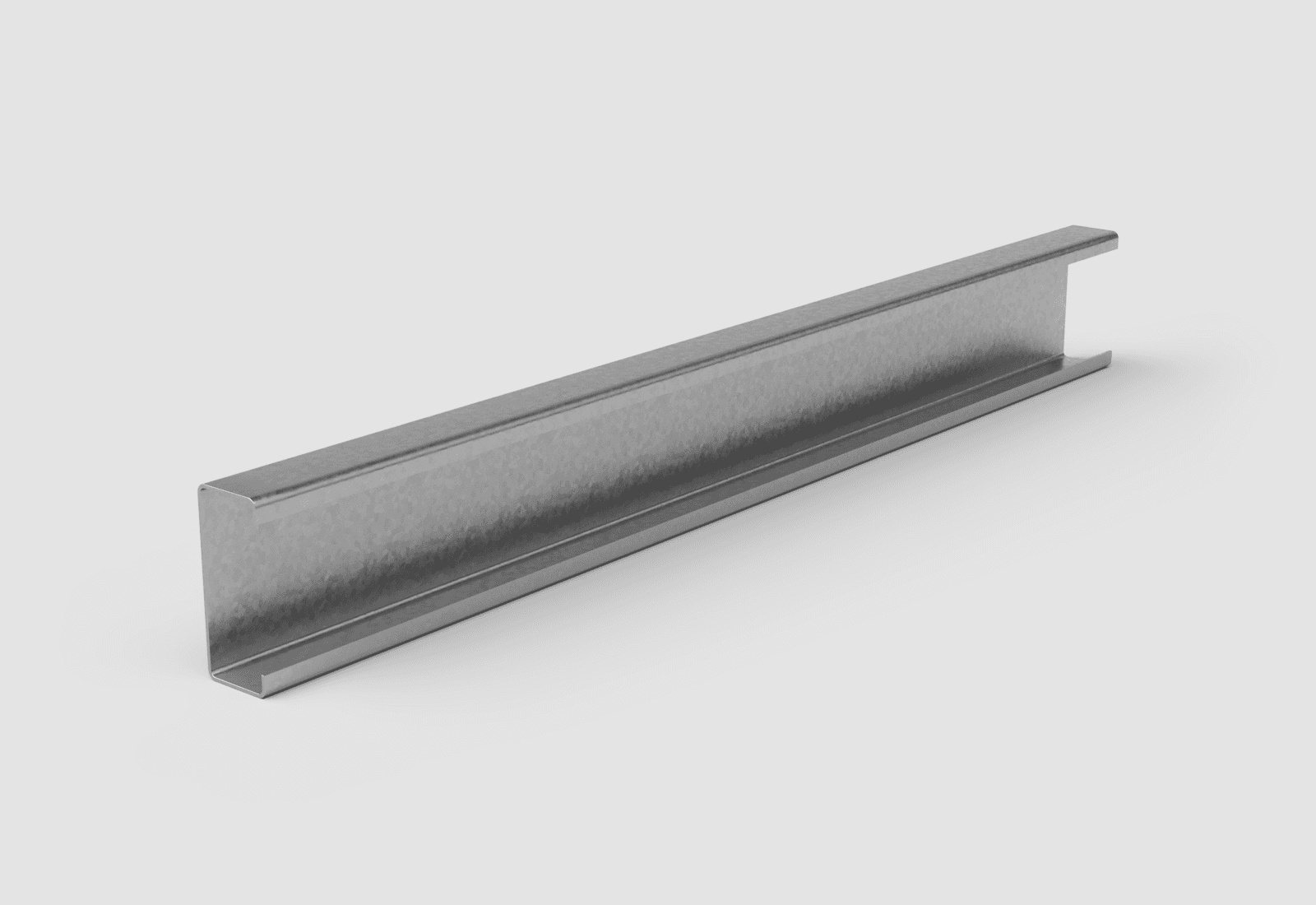
Mona Steel LLC, headquartered in Anaheim, California, designs tooling and roll-forms custom open profiles (C-channels, C- and Z-purlins, U-channels, hat/omega and sigma sections) from 20 gauge up to ¼ in. thick, with inline pre-punching, slotting, embossing and cut-to-length. We are set up for program work: profiles that run into thousands of linear feet, in production runs and repeat releases, for manufacturers, OEMs, racking companies, metal building suppliers and solar EPCs.
Roll forming is an economical way to produce long, consistent steel profiles in volume, and each custom profile is engineered around the customer’s loads, connections and install method.
Tell us what the profile needs to do. We will help you optimize the section, specify the right grade and coating, and add inline punching and slotting so parts arrive install-ready.
Engineered from the first sketch
Custom profiles succeed or fail in the engineering phase. Our process is built to get it right before production starts:
- Step 01
Requirements
Loads, spans, connection details, coating and installation method.
- Step 02
Section design
Profile geometry optimized for strength-to-weight and cost.
- Step 03
Tooling & prototype
Tooling is designed and first articles are produced for fit-up and testing.
- Step 04
Production runs
Consistent, high-volume runs with inline punching and cut-to-length.
From light-gauge purlins to ¼ in. C-channels
The same process covers light-gauge C- and Z-purlins and girts as well as heavier C, Z and U sections up to ¼ in. thick, for parts such as solar piles, pallet racking uprights and agricultural equipment members. Maximum thickness for a given section depends on its geometry and steel grade, so send the profile and we’ll confirm it before quoting.
Give the thickness as a decimal, not a gauge number alone: the same gauge maps to different decimals on different charts, and a decimal on the drawing removes the guesswork.
Programs and repeat releases
Programs run from tooling and first articles to repeat production releases. Longer runs bring the cost per foot down, because setup is spread across more feet of profile. Releases can be bundled and tagged by block, phase, building or install sequence and staged to your schedule, with mill test reports and heat-number traceability on every order.
We also quote smaller orders when we can help. For short quantities the same section can often be brake-formed instead; the comparison below shows where each process fits.
To plan a program, send:
- Expected annual volume, in tons or linear feet
- Release size and how often releases ship
- Delivery ZIP codes and any staging by block, phase or building
- Bundle size limits and the labels each bundle needs
Roll forming vs. press brake forming
Press brake forming is ideal for short runs and one-off shapes. Once a profile runs into thousands of linear feet, roll forming delivers lower cost per foot, tighter consistency along the length and the ability to punch and cut inline.
Not sure which is right for your quantity? We will price both and show you the break-even point.
| Factor | Roll forming | Press brake forming |
|---|---|---|
| Quantity it suits | Profiles that run into thousands of linear feet | Short runs and one-off shapes |
| Tooling | Roll tooling designed for the profile | Standard punches and dies |
| Cost per foot | Lower once the run is long | Higher on long runs, with no profile tooling to build |
| Holes and slots | Punched and slotted inline | Laser-cut in the flat blank before bending |
| Part length | Cut to length inline | Up to 26 ft in a single piece |
Laser-cut hardware on the same order
Clips, splice plates, connection plates and base plates that go with the profiles are cut on the 20 kW fiber laser, bent on the press brake when needed and shipped with the profiles on one purchase order. Galvanizing is coordinated in the same order, so a program’s profiles and hardware arrive together, with mill test reports for both.
What to send for a roll forming quote
The more of this a request includes, the fewer questions come back before the quote:
- A profile drawing (DXF, DWG, STEP or PDF), or a sample or photo with key dimensions
- Decimal thickness, steel grade and coating
- Hole and slot pattern, as a drawing or DXF
- Lengths and quantity per length
- Tons or linear feet per release, and expected annual volume
- Release schedule and delivery ZIP codes
- Documents required, such as mill test reports or galvanizing certificates
C-purlins, C-channels & Z-purlins Roll-formed profile RFQ checklist Request a quote
Who we roll-form for
- Solar racking & piles
- Metal building purlins & girts
- Warehouse & storage racking
- Greenhouse structures
- Data center framing
- Agricultural equipment
Custom Roll Forming FAQ
What order sizes does custom roll forming suit?
Mona Steel LLC is set up for volume work: profiles that run into thousands of linear feet, roll-formed in production runs and repeat releases. Minimums depend on the profile and whether tooling already exists. We also quote smaller orders when we can help: for short quantities we can often brake-form the same section, and we will price both so you can see the break-even point.
Can you match an existing profile?
Yes. Send us a drawing, a sample or even a photo with key dimensions and we can reverse-engineer the section, then recommend improvements if there is room to save weight or cost.
Can you roll-form ¼ in. C-channel?
Yes. Mona Steel LLC roll-forms C-channels, lipped or unlipped, along with Z, U, hat and sigma sections, from 20 gauge up to ¼ in. thick; the heavier sections go into parts such as solar piles, pallet racking uprights and agricultural equipment members. The maximum for a given section depends on its geometry and steel grade, so send the profile and we will confirm it before quoting.
Which galvanizing option should I choose for roll-formed parts?
Pre-galvanized coil (for example G90) is cost-effective for most indoor and moderate environments. For harsh or coastal exposure, hot-dip galvanizing after fabrication per ASTM A123 or zinc-magnesium coated steel may be the better choice. We will help you match the coating to the environment and design life.
What happens before the first production run?
Requirements come first (loads, spans, connection details, coating and installation method), then the section design, optimized for strength-to-weight and cost. Tooling is designed and first articles are produced for fit-up and testing before production runs start.
Who do you roll-form for?
Manufacturers, OEMs, racking companies, metal building suppliers and solar EPCs. Typical uses are solar racking and piles, metal building purlins and girts, warehouse and storage racking, greenhouse structures, data center framing and agricultural equipment.
Is roll forming or press brake forming cheaper for my quantity?
It depends on the run length. Press brake forming suits short runs and one-off shapes, with standard punches and dies and no profile tooling to build. Once a profile runs into thousands of linear feet, roll forming delivers lower cost per foot, tighter consistency along the length and inline punching and cutting. We will price both and show you the break-even point.
How do I get a quote for a custom profile?
Send a drawing, sample or photo with key dimensions, the decimal thickness, grade and coating, the hole pattern, lengths and quantities, tons or linear feet per release with expected annual volume, and the delivery ZIP codes. Our estimating team reviews every request and comes back with an itemized quote.
Where we deliver
We handle custom roll forming for shops and job sites across Orange County, Los Angeles County, the Inland Empire, San Diego County and the Central Valley, and ship to projects nationwide, including Texas, Arizona and Nevada.